Stair Climbing Knee-Friendly Cardio Progression Plan
A practical 2026 guide to using stairs for cardio without turning every session into a knee-stress test: setup, progression, stop rules, and safer alternatives.
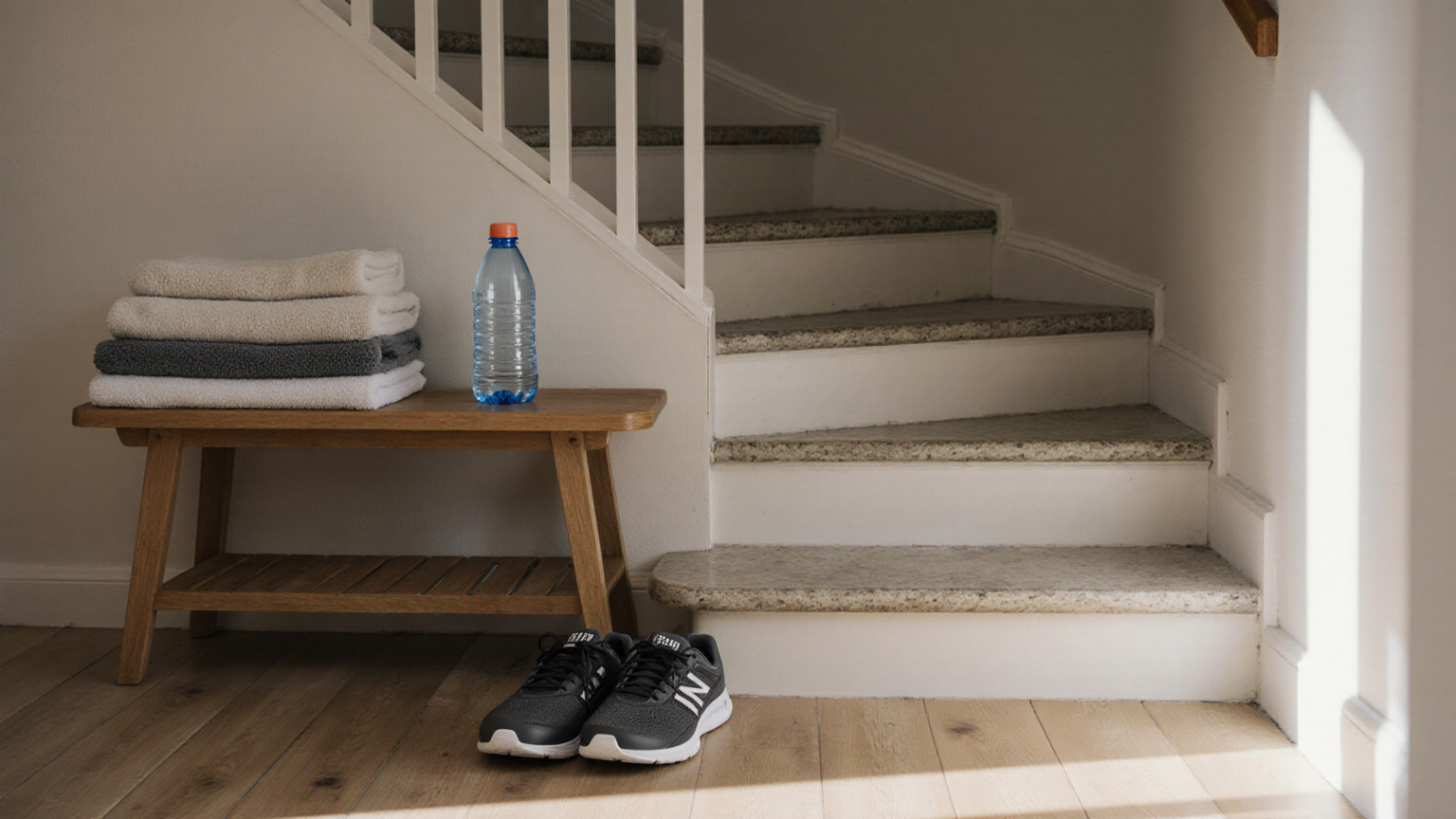
This article is for general education only and is not medical advice. Stop exercise and seek qualified care for chest pain, fainting, severe shortness of breath, neurological symptoms, uncontrolled blood pressure, recent surgery concerns, pregnancy-related concerns, or symptoms that worsen instead of improving.
Evidence and boundary review
BodyWise Lab articles cite primary sources, show update dates, and separate practical routines from clinical decisions. Source-checking is an editorial process, not a personal medical endorsement.
Stair Climbing Knee-Friendly Cardio Progression Plan
Why this stair plan is different
Stairs are convenient, measurable, and easy to overdo. This plan treats each flight as a dose of cardio rather than a challenge to conquer. As of 2026-06-30, public-health guidance still emphasizes regular aerobic activity plus strength work, while intensity guidance favors practical signals such as the talk test. The useful question is not whether stairs are good or bad; it is whether today’s dose matches your joints, balance, recovery, footwear, and available rail support.
Progression table
| Week | Main dose | Progress only if | Keep the safety rule |
|---|---|---|---|
| 1 | 2-4 easy climbs | No limp next day | Rail available on every descent |
| 2 | 4-6 easy climbs | Pain stays mild or absent | No speed work |
| 3 | 6-8 climbs or 10 minutes | Breathing stays conversational | Add strength on a separate day |
| 4 | 10-15 minutes | Recovery remains normal | Deload if stairs affect daily walking |
Set up before the first step
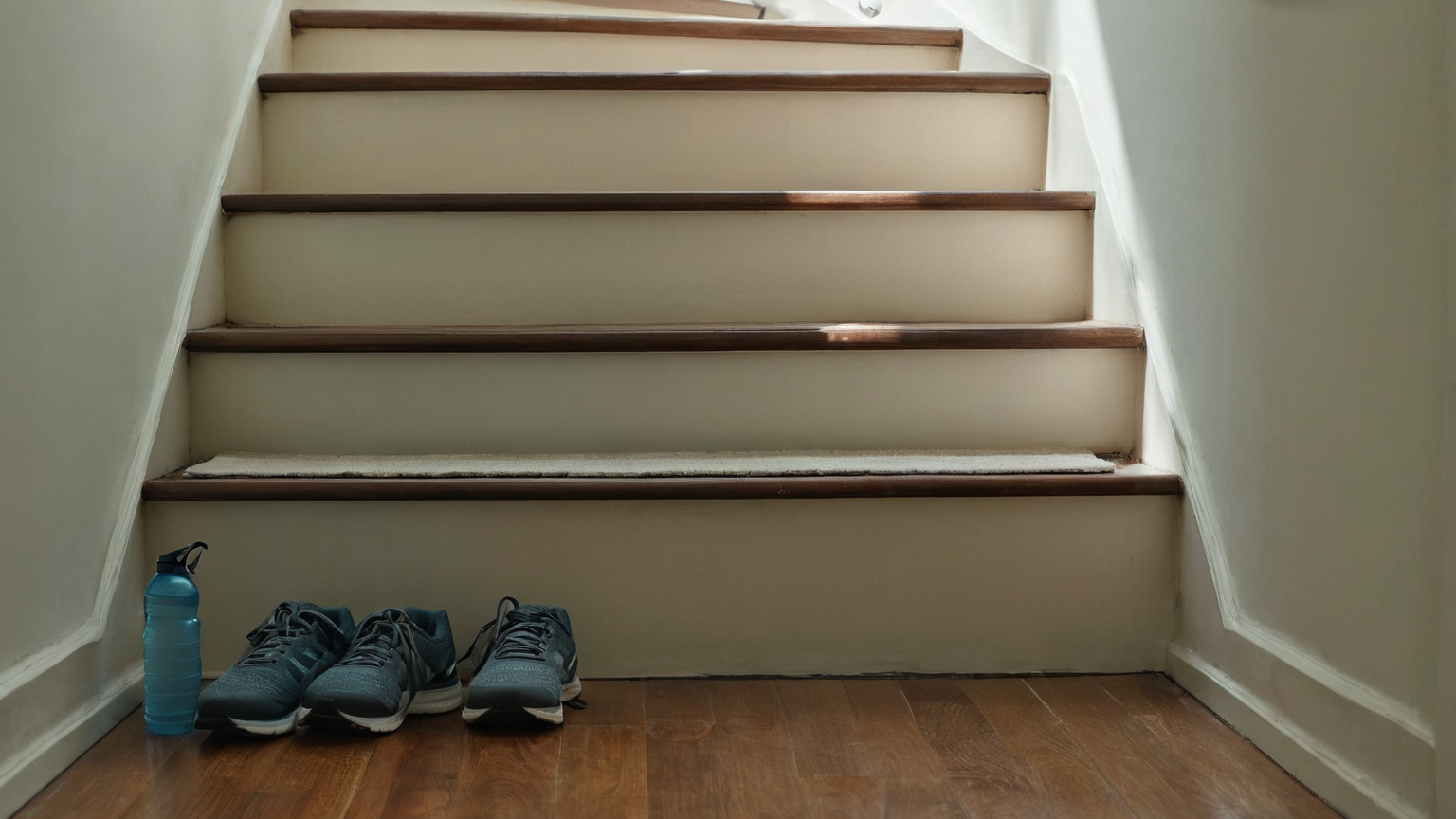
Choose a well-lit staircase with a stable handrail, dry treads, and no clutter. Wear shoes that do not slip at the heel. Keep pets, laundry baskets, and phones away from the route. If your knee is swollen, hot, unstable, recently injured, or medically restricted, do not use this plan as a workaround. Use flat walking or clinician-approved work instead. The goal is a repeatable routine that leaves you more confident tomorrow, not a heroic session that makes descending stairs unpleasant for two days.
The first-week dose
Start with five to eight minutes total. Walk up one flight at conversational effort, pause on the landing, then walk down slowly using the rail. Rest until breathing feels controlled. Repeat two to four times. Stop the set if knee pain rises above mild discomfort, if you limp, if you lose normal foot placement, or if breathlessness makes form sloppy. A knee-friendly progression is boring on purpose: it adds a small amount only after the previous amount felt stable.
Progression ladder
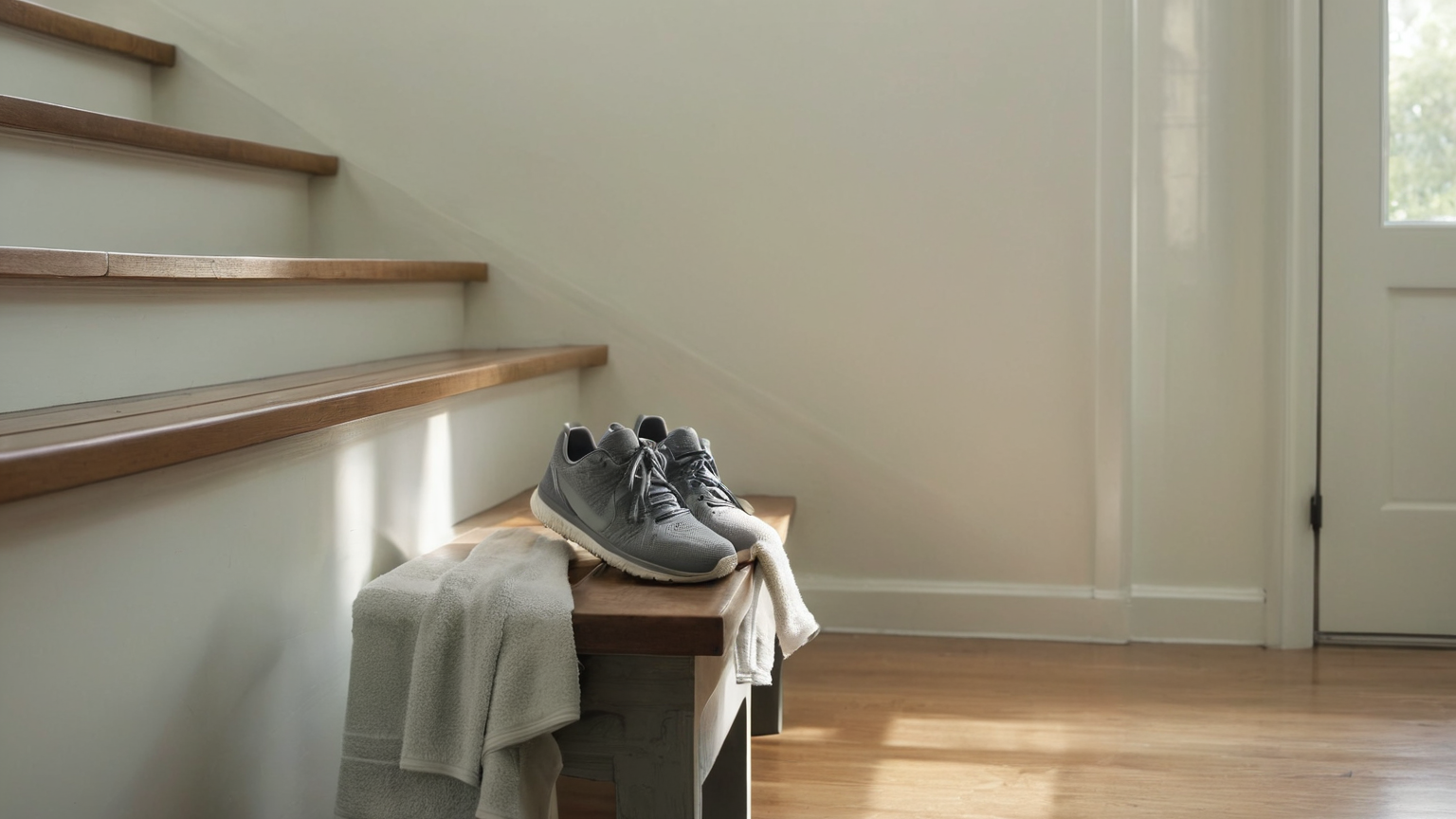
Progress by one variable at a time: more repeats, a slightly longer session, or a slower controlled tempo. Do not add load, speed, and extra descents in the same week. Many people tolerate climbing better than descending, so count descents as real work. If descending is the problem, climb one flight and take an elevator down where possible, or use a single low step for practice. Strength work for hips, calves, and quadriceps often makes stairs feel easier than simply doing more stairs.
How to use effort signals
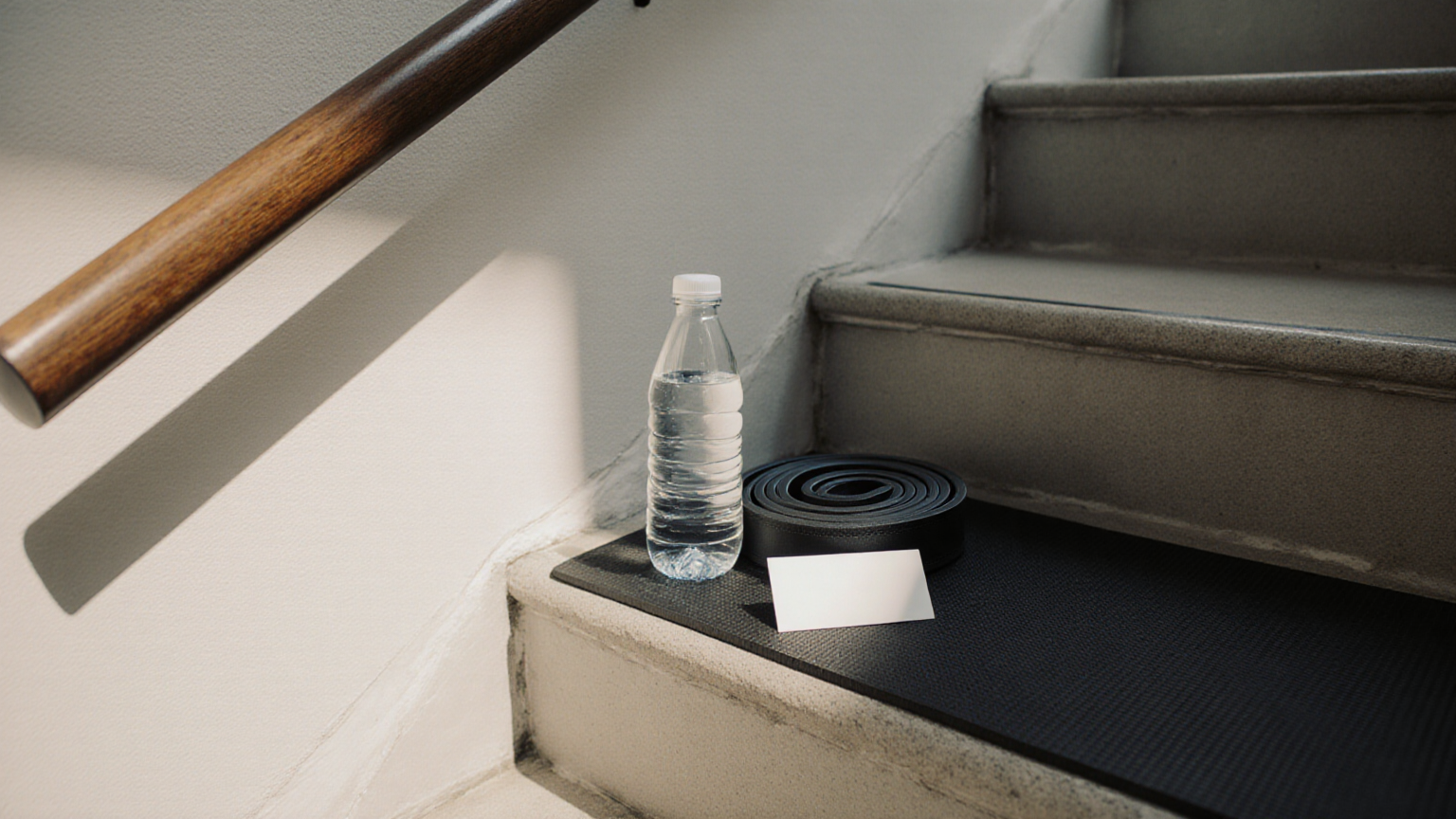
Use the talk test as the main governor. Easy-to-moderate work allows short sentences. Hard work allows only a few words. For this plan, most sessions should remain below the point where you gasp or rush the steps. Heart-rate watches can help with consistency, but stair climbing can spike quickly, and watch readings lag. If the number and your body disagree, trust breathing, form, and symptoms first.
Make it useful, not obsessive
Keep a tiny log with date, flights, pain during, pain the next morning, and confidence descending. A successful week is not the highest number of flights; it is three sessions that do not interfere with normal walking. If stairs become the only workout you do, add flat walking, mobility, and two weekly strength sessions so the plan supports broader health rather than narrowing your movement options.
Quick checklist
- Confirm the main safety boundary before starting.
- Use the table to choose the next action instead of guessing.
- Keep one small log or note so the routine improves over time.
- Stop when the situation no longer matches the safe assumptions in this guide.
- Recheck authoritative guidance when rules, equipment, or household needs change.
FAQ
Can stair climbing be knee-friendly?
It can be lower-risk when volume is small, rails are available, pain is monitored, and step-down work is limited. It is not automatically appropriate for acute injury, swelling, or clinician-restricted knees.
How hard should the first session feel?
Use a conversational effort, not a breathless sprint. If you cannot speak in short sentences, the first session is too hard.
What if stairs hurt on the way down?
Walk down slowly with the rail, use an elevator for descents if available, or switch to flat walking and strength work until symptoms settle.
Troubleshooting the common failure points
If your breathing is fine but the front of the knee complains, shorten the session and reduce descents before blaming cardio fitness. Many stair problems come from doing too much lowering work too quickly. Use the rail, place the whole foot on the step, and keep the knee tracking roughly in the direction of the toes instead of collapsing inward. If discomfort is sharper on one side, or if swelling appears later, pause the stair plan and use a flat route until you can get qualified advice.
If your calves burn before your heart rate rises, you may be pushing through the toes and rushing the climb. Slow the step, let the heel settle when the step depth allows, and keep the torso tall. If balance feels uncertain, the progression is too advanced for the staircase you chose. Move to a lower step, a wider public stair, or a flat walking route with short hill segments.
Two-day sample routine
Day one is the stair day: warm up with five minutes of flat walking, do two easy climbs, rest, do two more only if form remains clean, then cool down on flat ground. Day two is support work: sit-to-stand from a chair, calf raises near a counter, gentle hip-hinge practice, and an easy walk. This split keeps the plan from becoming a daily knee test.
How to know the plan is working
The best signal is ordinary life feeling easier: carrying groceries up one flight, reaching a train platform without rushing, or recovering faster after a hill. A second signal is consistency. Three modest sessions that fit your week are better than one maximal workout followed by avoidance. If your log shows rising pain, poorer sleep, or reluctance to use stairs outside the workout, reduce the dose. Fitness gains should not require negotiating with a painful joint every morning.
Reader safety summary
Use this guide as a self-check framework, not a prescription. People with cardiovascular symptoms, recent surgery, balance disorders, uncontrolled blood pressure, or clinician restrictions should get individualized guidance. People who feel well but are returning after a long break should progress slowly enough that the next session is still inviting. That is the practical definition of a sustainable stair workout.
Practical example workflow
Here is how a reader can apply the guide without buying anything or trusting a vague rule of thumb. First, identify the exact situation in front of you and write down the constraint that matters most. Second, choose the smallest safe action from the table instead of trying to solve every related problem at once. Third, check the result later the same day and again the next day. If the action created a new problem, reverse it and choose the lower-risk option. If the action helped, repeat it until it becomes normal stair-workout behavior rather than a one-time project.
The reason this workflow is included is quality control. Many short web articles give a conclusion but skip the decision process. A good evergreen guide should make the reader less dependent on the article after reading it. The table, checklist, and stop rules are designed for that: they turn the topic into a repeatable routine with boundaries.
Mistakes to avoid
The first mistake is treating a single tip as universal. Conditions change by training history, symptoms, sleep, footwear, staircase design, and recovery. The second mistake is waiting until the problem is already urgent. Most of the safer choices in this guide work best when done early. The third mistake is ignoring the boring record. A short note about what you tried, when you tried it, and what happened often prevents repeated guessing.
The fourth mistake is over-optimizing gear. Better equipment can help, but equipment does not replace judgment, maintenance, safe handling, or follow-through. Before spending money, make sure the no-cost routine is clear. If the no-cost routine fails because of a safety concern, damaged equipment, medical symptoms, or home conditions outside your control, that is the point to get qualified help rather than forcing the routine.
Final reader takeaway
Use the guide as a decision aid: prepare early, act smoothly, watch the result, and keep conservative boundaries. The best outcome is not dramatic. It is a routine that quietly reduces risk, saves time, or improves comfort without creating a new hazard. If you share the routine with someone else in the household, share the stop rules too, because a checklist without limits can encourage exactly the kind of overconfidence this guide is trying to prevent.